Vemus — AI Music Creation App
0-to-1 design for an AI music app
After QQ Music AI Music Creation proved that everyday users were willing to create music with AI, Vemus faced a new question: what happens after the first song is generated? How do we keep users inspired, help their work reach an audience, and give them a reason to come back and create again?
I was responsible for Vemus’s overall interaction architecture and core creation experience. My focus was to connect its AI features into one continuous journey—from inspiration and music generation to singing, MV creation, publishing, exposure, and monetization. Vemus became more than a music generation tool: it became an AI music community where creators can keep making, sharing, and growing their work.
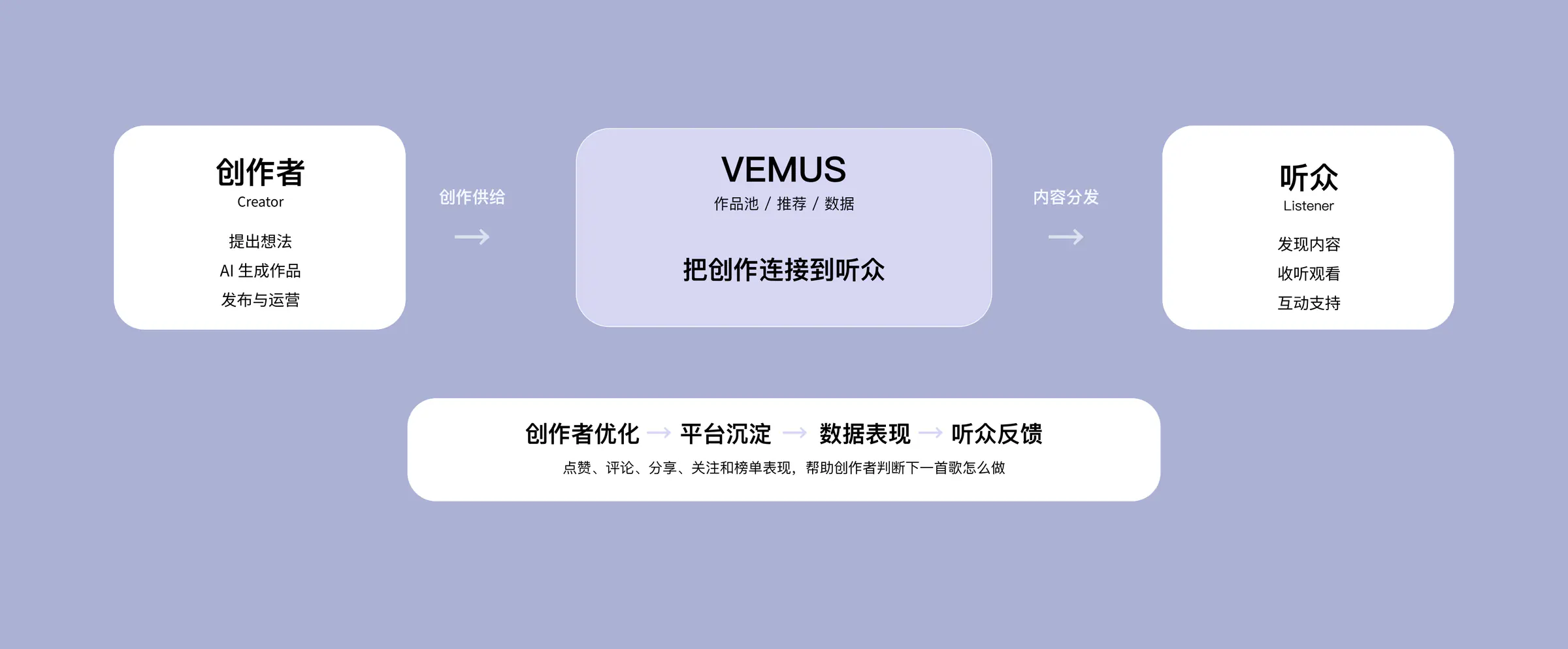
Core Insight: Creation Should Not End at Generation
Inspiration Entry Points
Surface relevant starting points through listening behaviors, trends, images, and music recipes.
Generate and Refine
Turn loose creative intent into the right workflow for song generation, AI singing, or AIMV creation.
Post-release Growth
Move finished work into publishing, distribution, rankings, and incentives so each creation can lead naturally to the next.
Step 1: Turn Inspiration Into Action
Many users want to express an idea or emotion through music but do not know how to translate a mood, image, or favorite song into a clear creative brief. Vemus maps different types of inspiration to distinct creation paths, helping listeners, casual creators, and more experienced users get started with less friction.
Path 1: Capture Creative Intent While Listening
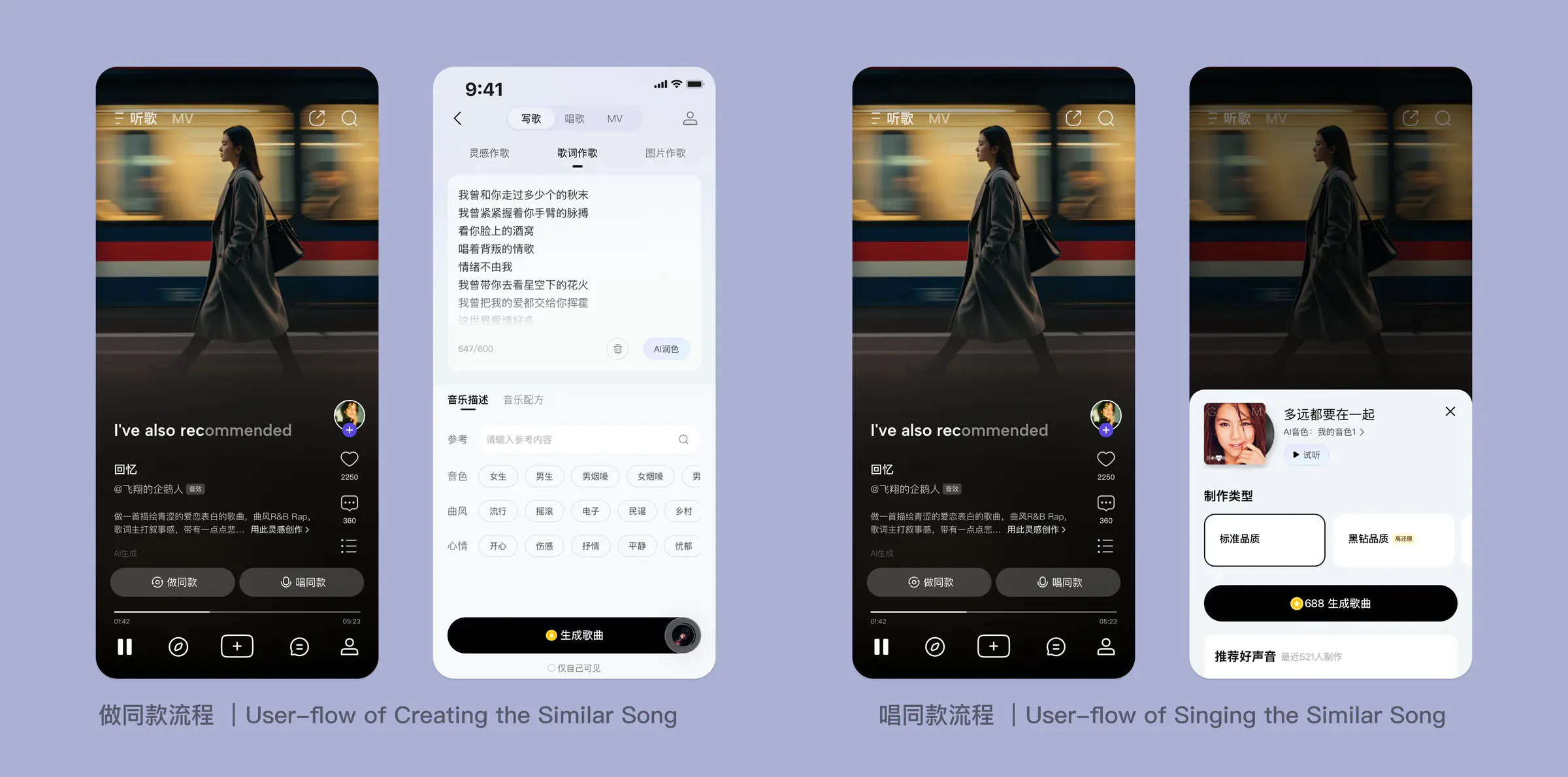
For users who start as listeners and create only when inspiration strikes, timing matters. When they discover a song they like, that motivation can disappear quickly once they leave the listening experience. I designed "create a similar song" and "sing this version" entry points that carry relevant song context into the creation flow, allowing users to move directly from listening to making their own version.
Path 2: Match the Entry Point to the Creator's Skill Level
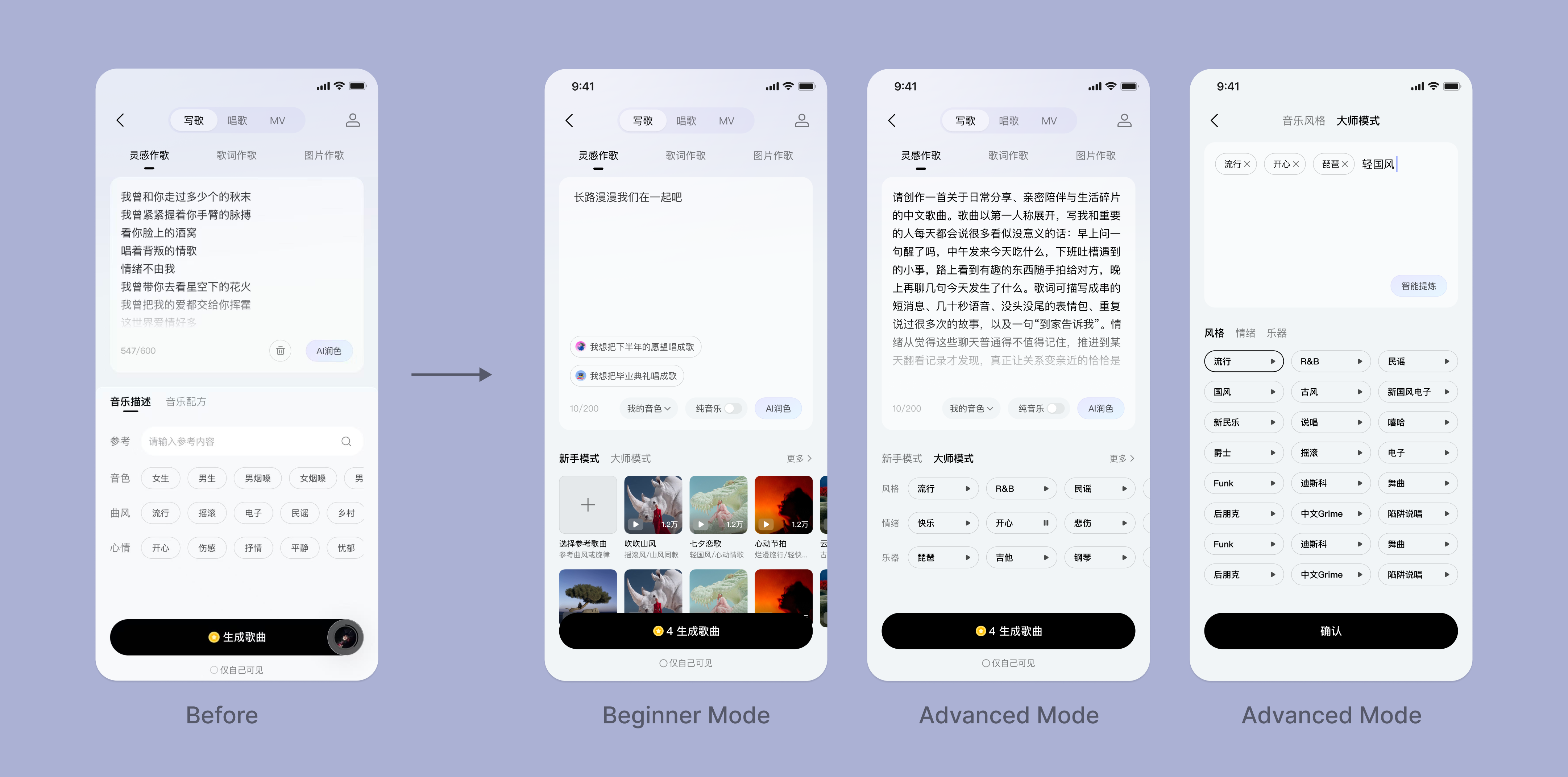
I split the creation entry into beginner and advanced paths. Beginners do not have to start from an empty prompt: they can choose trending inspirations, expand them into structured prompts or lyrics, and preview music recipes to understand possible styles. More advanced users keep greater control, with direct access to detailed parameters such as genre and style before generating.
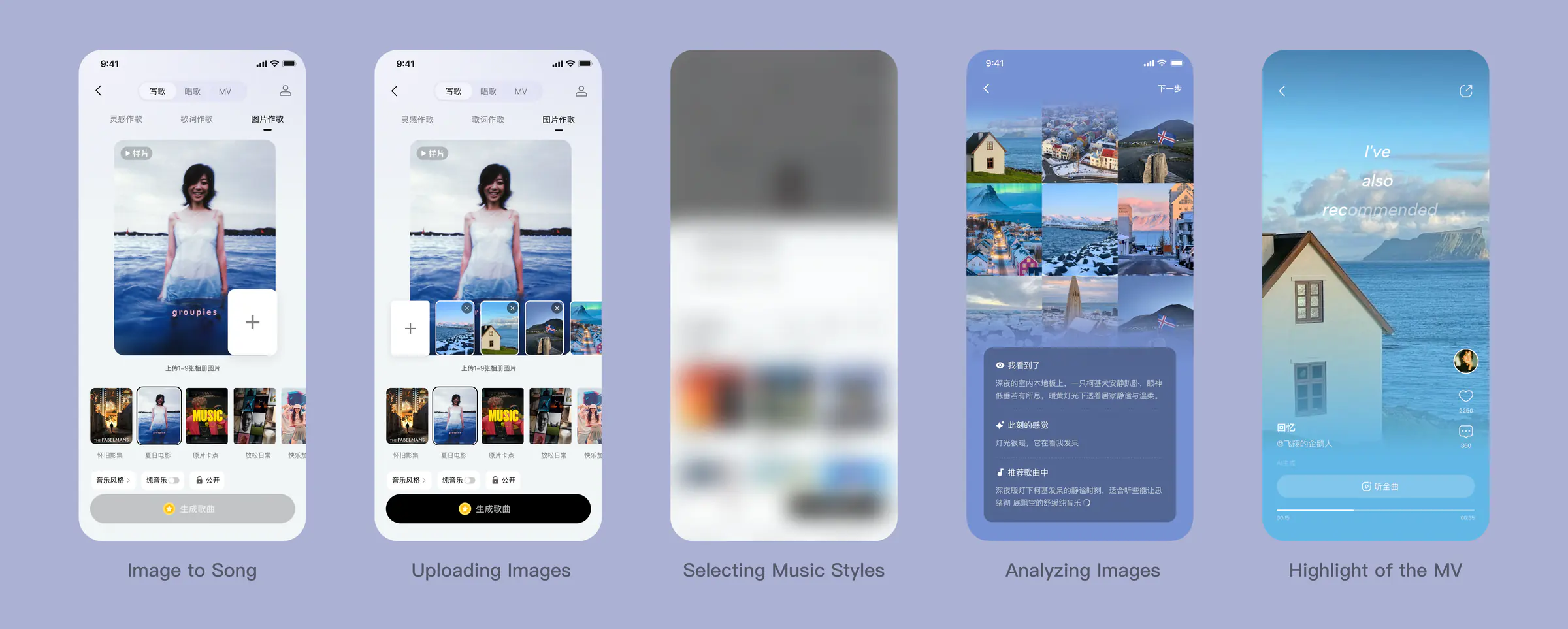
Path 3: Turn Images Into Music and Story
For users whose ideas begin visually, images become an independent creative starting point. Users can upload photos and select a style, while the system interprets visual content, mood, and focal elements and reflects that understanding back during generation. The final AIMV turns the original images into music video content that is ready to publish and share.
Step 2: Turn Generated Content Into Work Users Want to Own
After a song is created, retention depends on whether users feel the result is worth keeping, publishing, and sharing. Vemus extends the journey beyond generation through music distribution, release certificates, rankings, and promotion, giving each work a stronger sense of identity, visibility, and potential value.
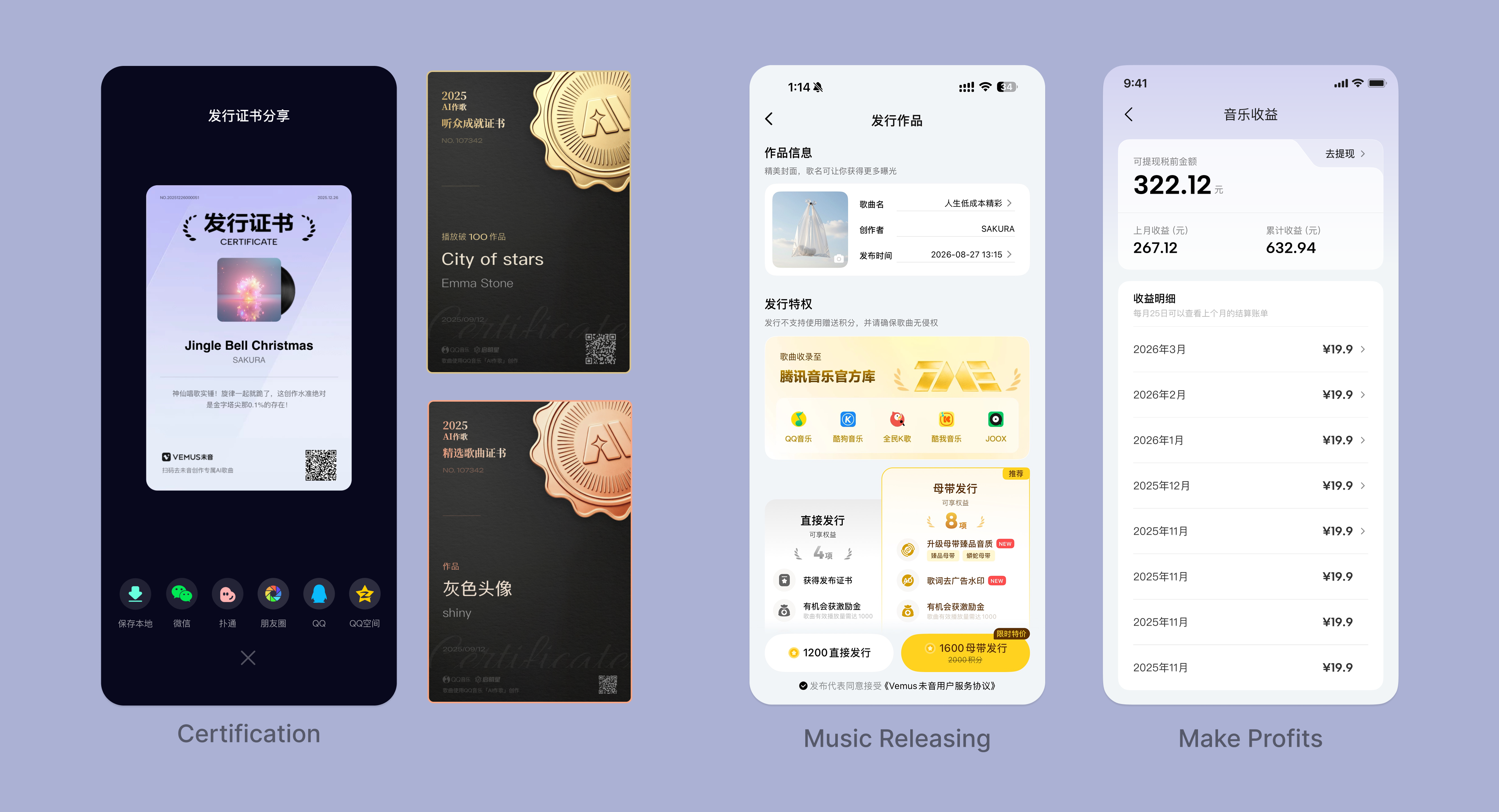
Release songs across Tencent Music platforms so they can be discovered, verified, and monetized.
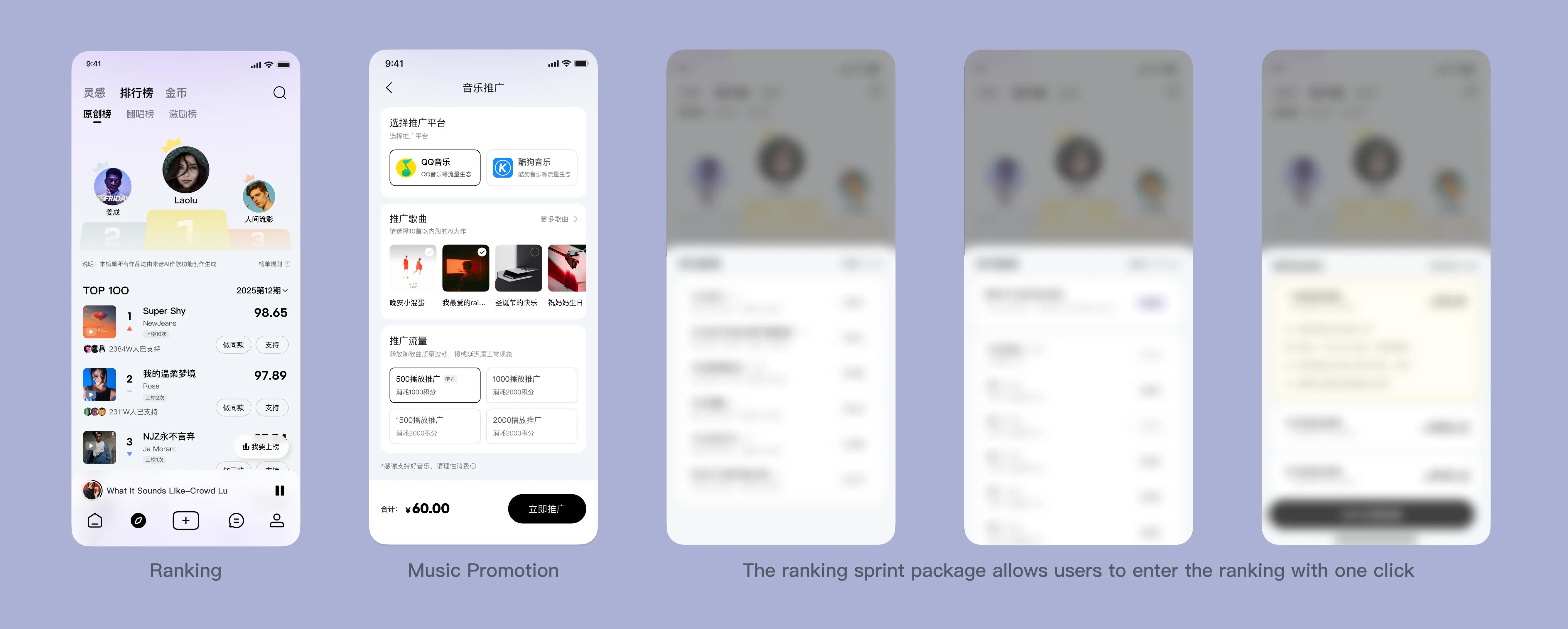
Use rankings, derivative creation, and promotion tools to help works continue circulating after release.
Path 1: Give Each Work an Official Identity
Music distribution formalizes the transition from generation to release. After users add song information, cover artwork, and release settings, their work can be distributed across Tencent Music platforms and become eligible for copyright-related revenue. Release certificates further reinforce a sense of ownership and creative progress. For many users, this is the moment when "AI generated something for me" becomes "I released my own song."
Path 2: Help Each Work Reach More Listeners
Rankings create an additional layer of exposure and promotion after release. Listeners can support songs they like or use them as inspiration for their own creations, while creators can complete promotional tasks or purchase additional exposure to compete for greater visibility.
Step 3: Build Long-term Participation
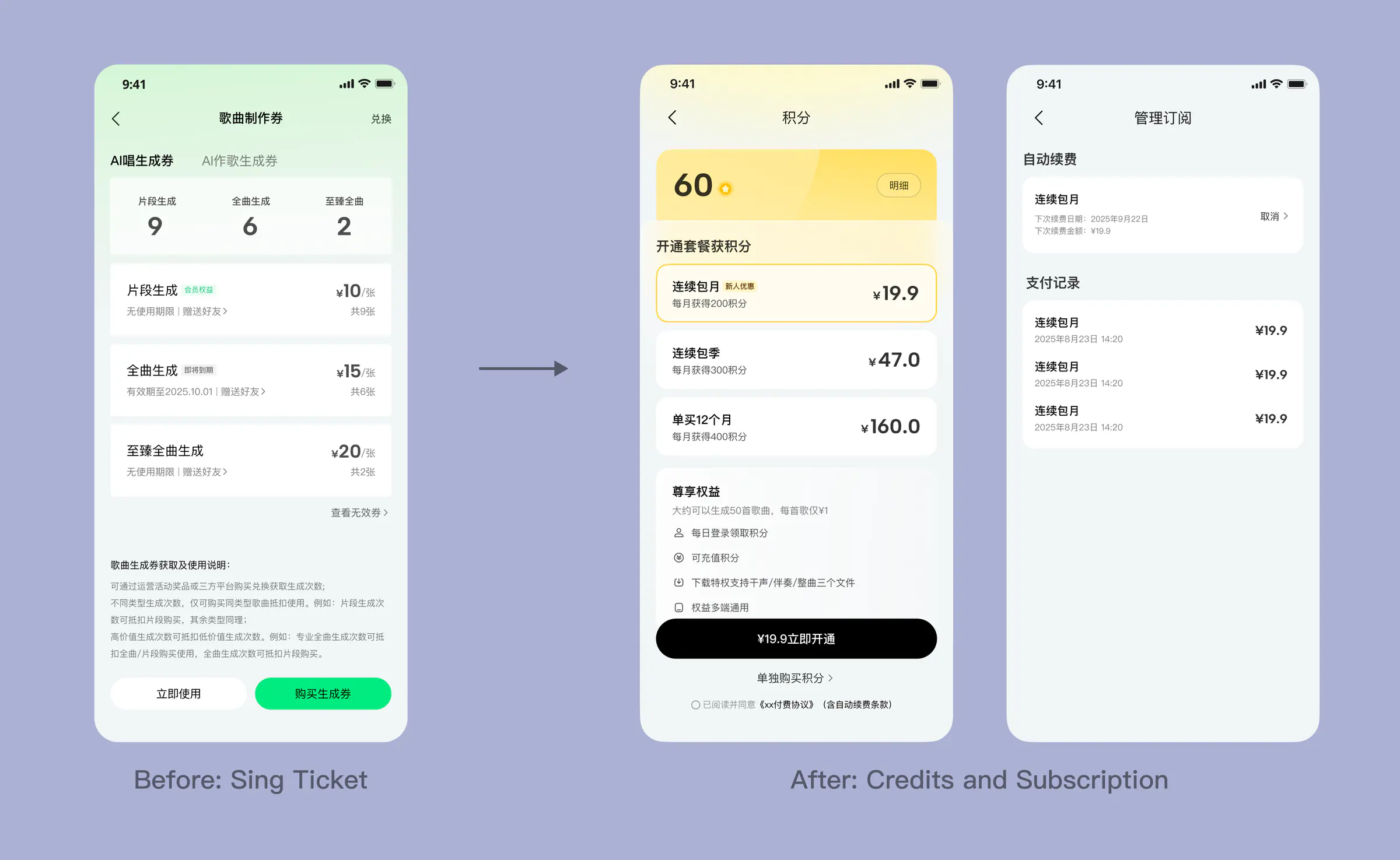
If monetization depends only on one-off generation vouchers, the relationship with the user ends as soon as the transaction is complete. I explored a longer-term incentive and membership model in which coin-based tasks encourage repeat participation, while points and membership benefits turn sustained engagement into recurring paid value.
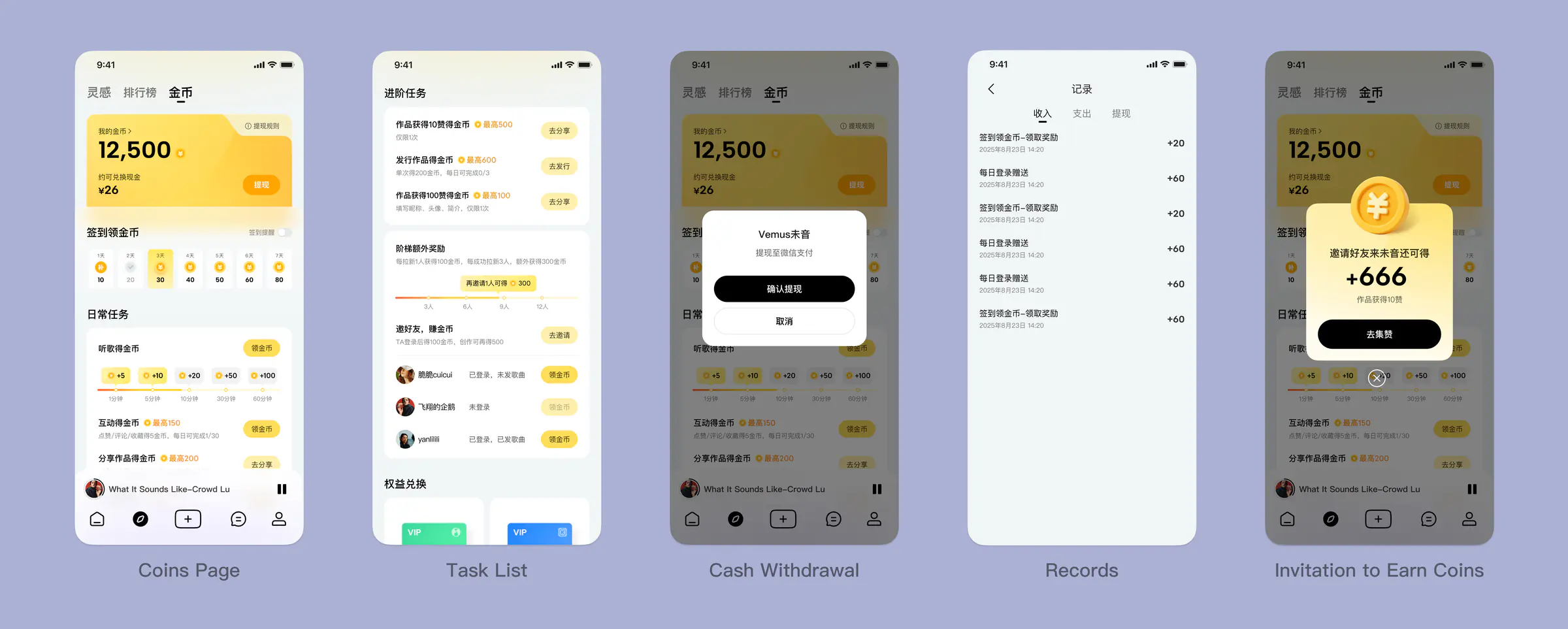
Use tasks, rewards, and cash-out incentives to encourage activity, sharing, and repeat participation.
Convert repeated engagement into tiered benefits, shifting monetization from one-off purchases toward longer-term value.
Path 1: Use Coins to Reinforce Retention
The coin system is designed to strengthen retention and user-driven distribution. Users earn coins through check-ins, listening, sharing, and community interactions, and can redeem eligible rewards through WeChat. For the platform, the system connects everyday activity with acquisition, engagement, and content circulation. For users, it gives listening, creating, and interacting a more tangible sense of progress and reward.
Path 2: Extend One-time Purchases Into Membership Value
The early monetization model centered on single-use vouchers for song generation and AI singing. I proposed extending this into a broader points and membership system: coins encourage repeated listening, creation, sharing, and ranking participation, while points and membership translate sustained engagement into differentiated benefits and longer-term paid conversion.