QQ Music AI Music Creation
AI Music Creation was one of the core AI initiatives I worked on at QQ Music. I was responsible for shaping the product direction and core creation experience, as well as the publishing, discovery, creator recognition, and monetization flows around AI-generated music.
The key challenge was not simply showing users what AI could generate, but understanding why they would want to create in the first place. Supporting a favorite artist, responding to a trending topic, expressing something personal, or simply playing with music could all become meaningful reasons to start.
My work focused on turning these existing motivations into low-barrier creation journeys that users could easily enter, complete, publish, share, and return to.
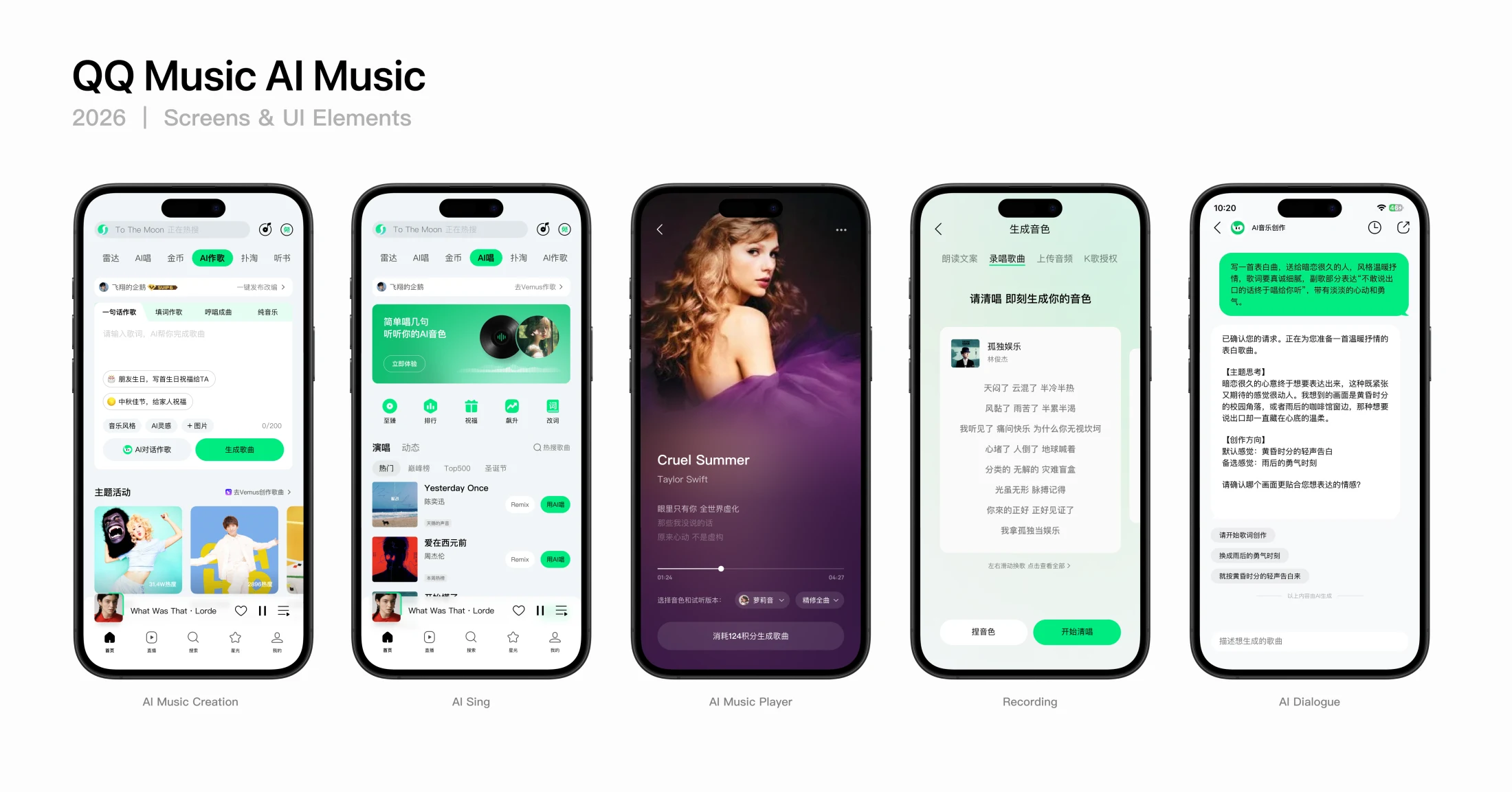
Why Would Listeners Want to Become Creators?
How might we lower the barrier to first-time creation while giving users meaningful reasons to publish, share, and return?
1. Starting With Fan Motivation
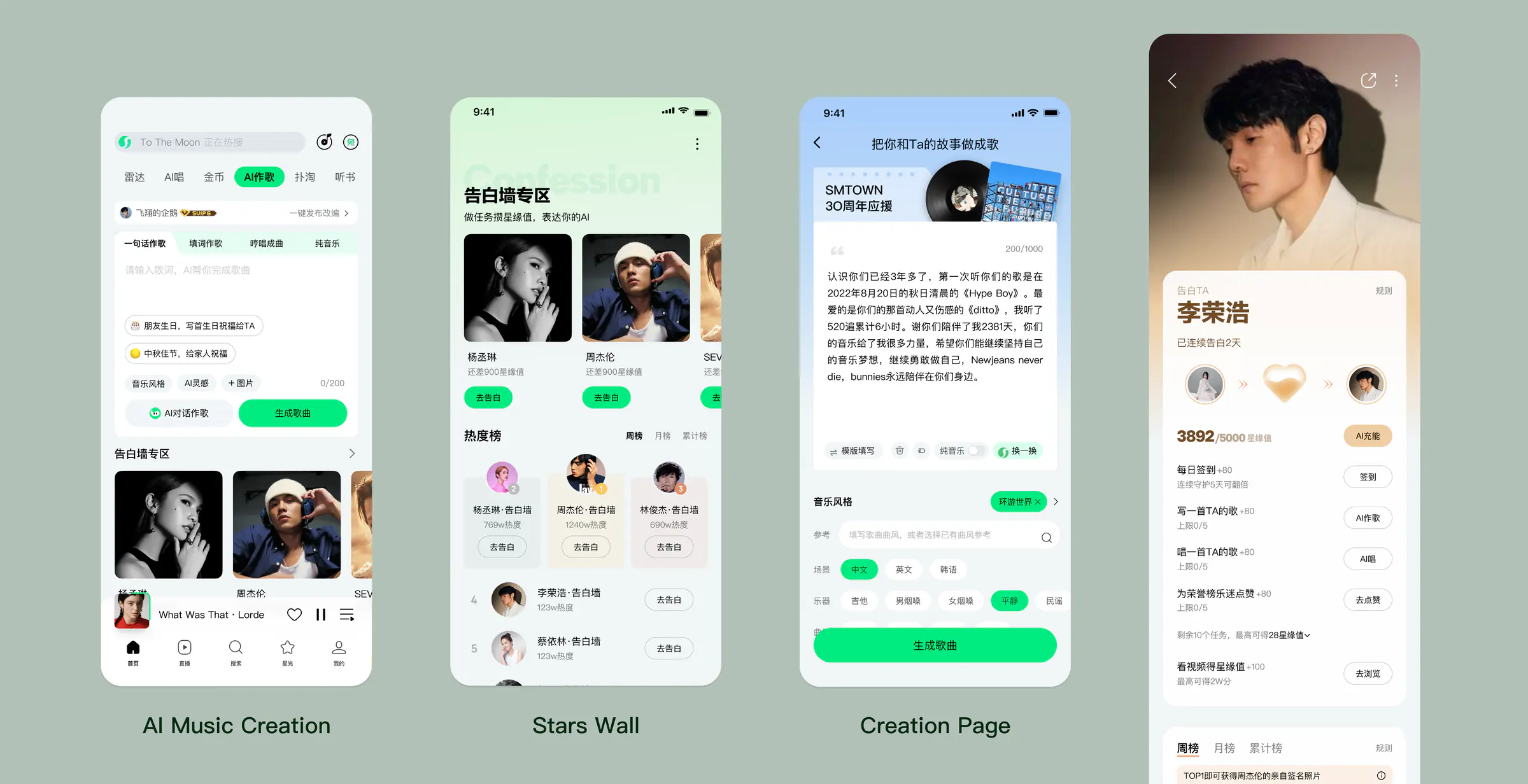
I first mapped the end-to-end creation journey, from choosing an entry point and providing initial input to generating, publishing, and sharing a finished song.
Fan-driven engagement is an important part of the QQ Music ecosystem. Users were already supporting their favorite artists by purchasing digital albums, contributing to rankings, and participating in fan campaigns.
Rather than asking users to start with a blank prompt, I designed the experience around a behavior they already understood. Users could choose an artist they cared about, respond to a theme, and write a short personal message. AI would transform that input into a personalized song, essentially turning fan expression into something they could create and share themselves. The finished song could also contribute to artist rankings and increase the user's fan affinity with the artist, connecting AI creation back to QQ Music's existing fan ecosystem.
This gave users a clear reason to create before asking them to learn a new AI tool. Instead of thinking, "What should I make?", they could begin with something they already wanted to say.
2. Trend-Led Remixing
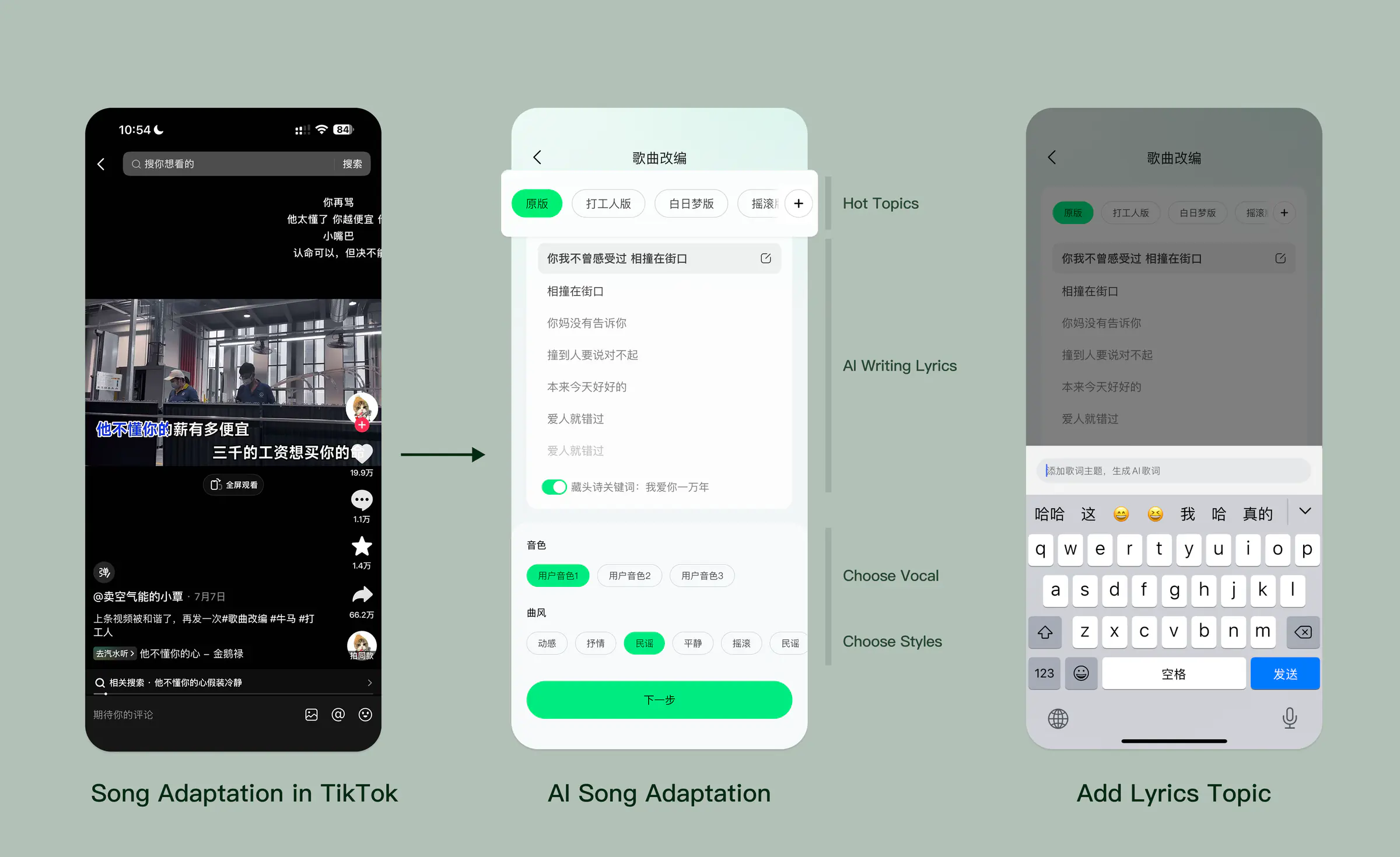
AI remixing offered another lightweight entry point into creation.
I noticed nostalgic songs being reworked into humorous, meme-driven versions on Douyin. Rather than requiring users to understand music production or write detailed prompts, I designed a lightweight remix flow around that behavior.
Users could choose a topic, AI generate new lyrics, and make a few simple decisions around voice and musical style. AI handled the complexity behind the scenes. This made it possible to create something timely, playful, and shareable in just a few steps, turning participation in an online trend into a music creation experience.
3. Recognition & Feedback Loops
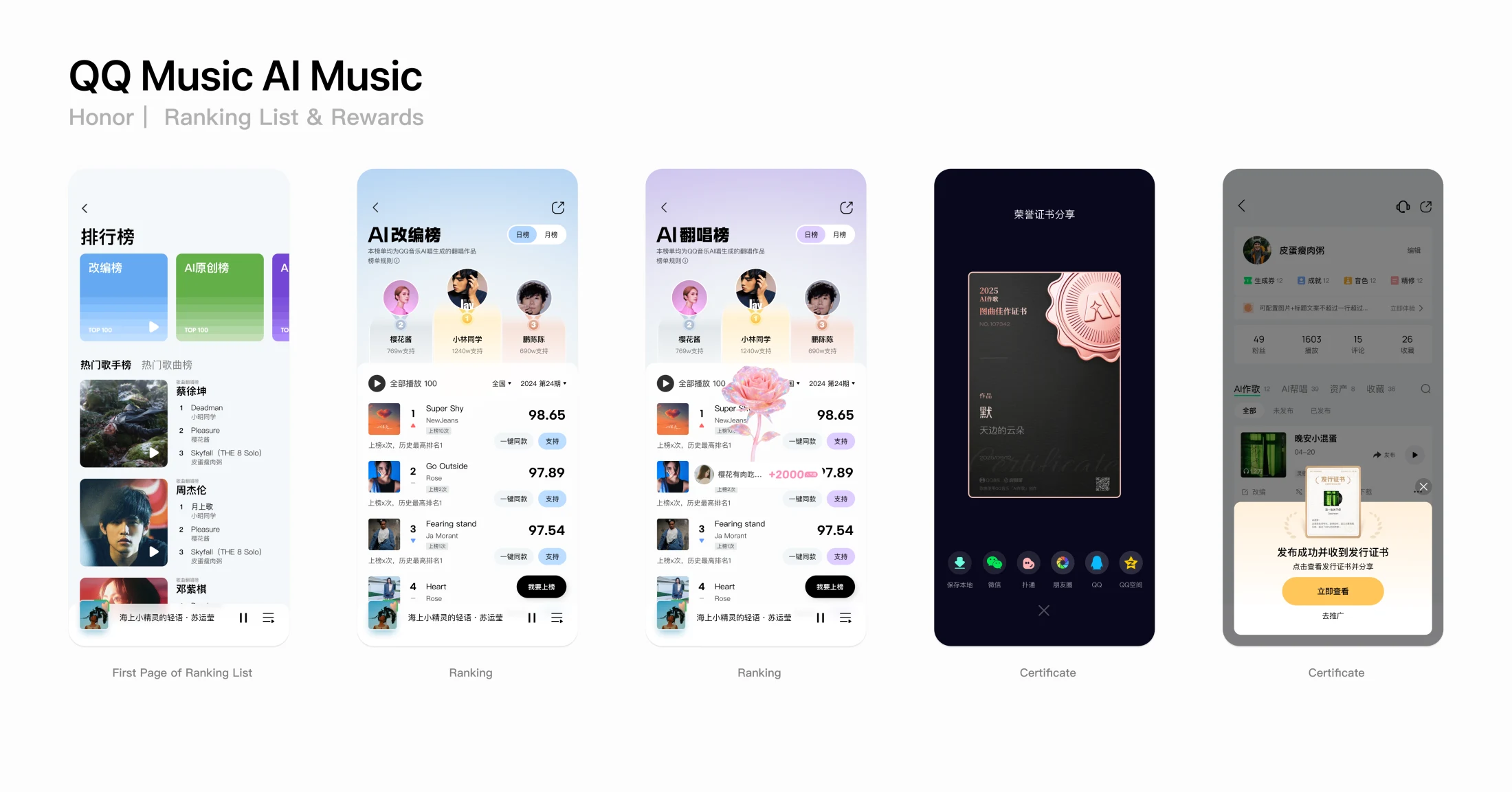
Generation alone was not enough to bring users back.
To support repeat creation, I explored rankings, artist-support mechanics, creator recognition, and performance feedback after publishing.
Instead of leaving AI songs as one-off outputs, these mechanisms turned them into public creations that could be discovered, ranked, and showcased. Once a song was published, users could see how it performed, gain recognition for their work, and gradually build a sense of creator identity.
The goal was to create a feedback loop:
Create -> Publish -> Get Feedback -> Gain Recognition -> Create Again
This shifted the experience from completing a single AI task toward participating in an ongoing creator ecosystem.
4. Monetization & Creator Incentives
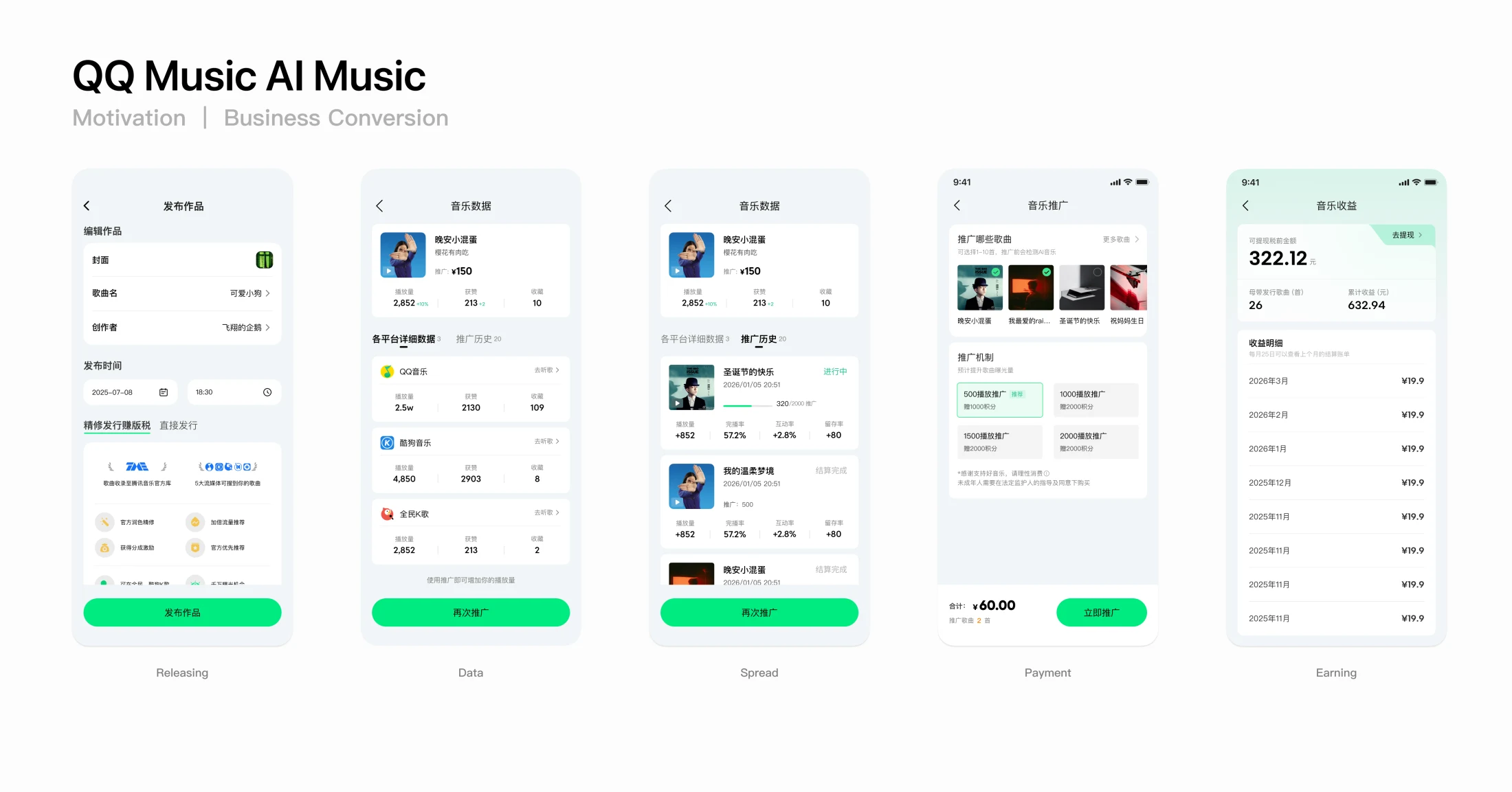
Monetization worked best when it appeared at moments of clear user intent.
Rather than placing paid features in front of users before they had created anything, I designed upgrade paths around what creators naturally wanted next: better distribution, greater exposure, and more opportunities to earn from their work.
Paid release, promotion tools, and creator rewards extended the journey beyond generation and gave users meaningful reasons to invest further in their creations.
This connected user value with business value:
Creation -> Publishing -> Distribution -> Recognition -> Monetization
The goal was not simply to add paid features, but to make monetization feel like a natural next step once users cared about the outcome of what they had created.
Project Summary
This project reinforced a core product principle for me: generative capability alone does not create user value. People need a meaningful reason to create in the first place.
For QQ Music, those reasons already existed: supporting an artist, responding to cultural moments, expressing something personal, or simply playing with music. My role was to translate those motivations into clear entry points, guided creation flows, and meaningful post-creation experiences.
The result was an end-to-end creation loop that connected AI generation with publishing, discovery, recognition, repeat creation, and monetization.